Before the First Post Goes In: What a Pre-Installation Site Evaluation Covers in the East Valley
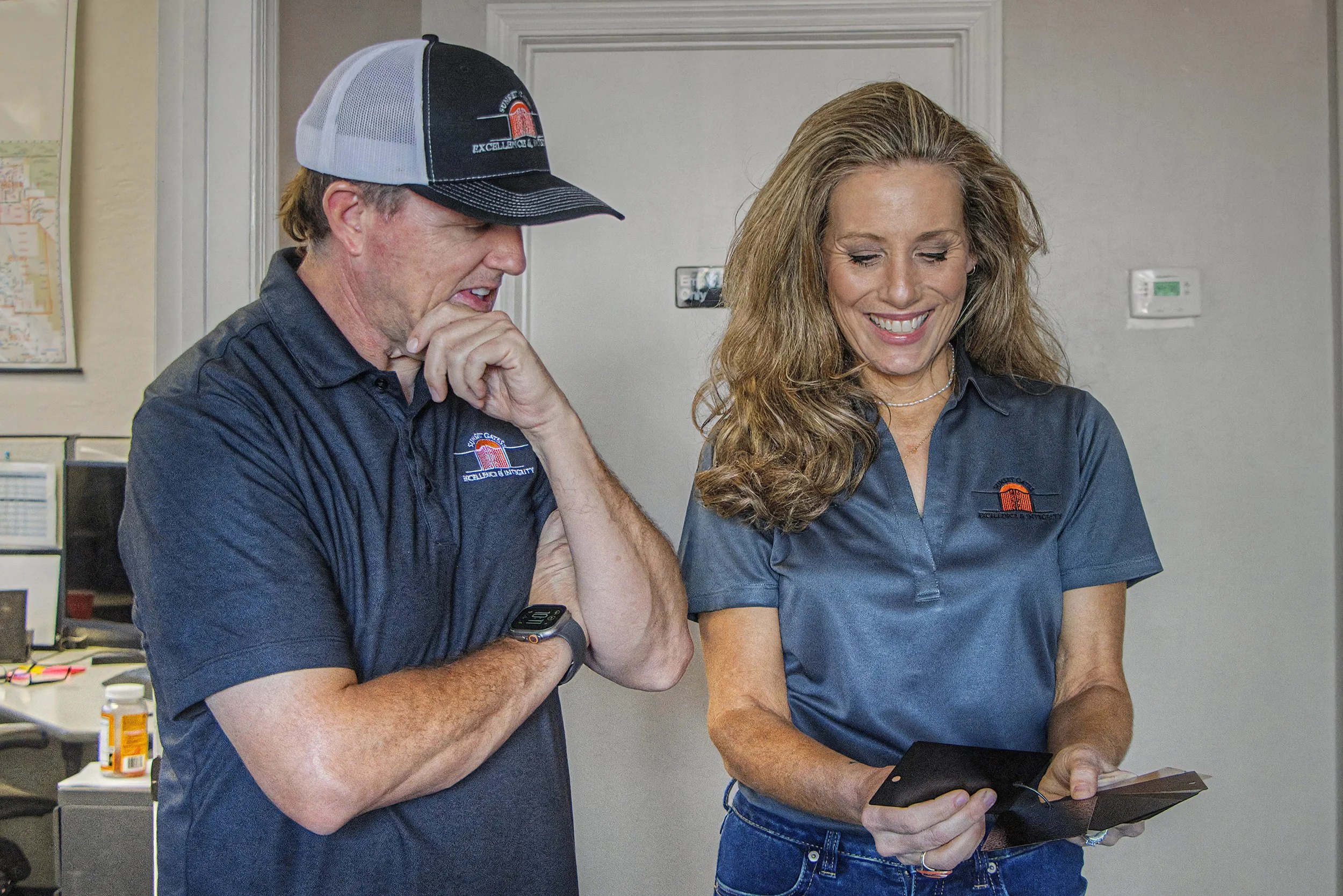
Every gate installation starts with a proper site evaluation
Every problem that appears during or after a gate installation in the Greater Phoenix metro can be traced back to one of two sources: a fabrication error or a site evaluation failure. Fabrication errors are rare when the fabricator is competent. Site evaluation failures are far more common because site evaluation requires time, expertise, and a willingness to deliver information the homeowner may not want to hear, and some companies skip it or minimize it in the interest of moving quickly to the sale.
At Sunset Gates, the pre-installation site evaluation is the foundation of every project. It is not a formality, and it is not a sales tool. It is a professional assessment that determines what the project actually requires — before any commitment to a scope or a price is made. Here is what that evaluation covers and why each element matters for homeowners in Tempe, Mesa, Gilbert, Chandler, Scottsdale, and throughout the East Valley.
Ground Conditions: The Variable Most Often Underestimated
Soil Type and Expansive Soil Assessment
The Greater Phoenix metro sits predominantly on soils classified as expansive — meaning they absorb moisture during monsoon season and contract during dry periods. This expansion and contraction cycle exerts lateral forces on anything embedded in the ground, including gate posts. The magnitude of these forces varies by soil composition, depth, and the specific moisture history of the site.
During the pre-installation evaluation, we assess soil conditions at planned post locations. This informs both post diameter and footing depth specification. A post that is adequately sized for a non-expansive soil may be inadequate for the expansive soils found in many Tempe, Mesa, and Gilbert neighborhoods.
Caliche Layer Detection
Caliche — a hardened calcium carbonate layer that forms at varying depths throughout the Phoenix metro — presents a specific challenge for gate post installation. Caliche can be found as shallow as twelve inches below grade in some locations or as deep as four feet or deeper in others. Its presence affects how post-excavation is done, whether mechanical breaking is required, and how footing concrete is placed and consolidated.
We probe for caliche at post locations during every site evaluation. Discovering caliche during excavation — after equipment is on-site and work has begun — is avoidable with proper pre-evaluation. Discovering it during the evaluation is just information.
Pro tip: Caliche depth can vary significantly within a single property — even between two post locations twelve feet apart. We probe multiple points rather than assuming uniform depth across the site. This takes a few extra minutes during the evaluation and can prevent a significant schedule disruption on installation day.
Drainage Patterns
Standing water at or near post locations is a long-term corrosion accelerant for steel posts, regardless of coating quality. During the evaluation, we note drainage patterns — where water flows during a monsoon event, where it pools, and how quickly it drains. Post locations in drainage paths or pooling zones receive additional consideration in the footing design.
Existing Structure Assessment
Block Pillar Condition
Many East Valley properties have existing block pillars from a previous gate installation or original property construction. These pillars look solid in most cases, but appearance is not a reliable indicator of structural condition. During the evaluation, we check pillar plumb on both axes, probe mortar condition at the joints, assess any visible cracking in the block or cap, and evaluate the placement of existing hinge anchor hardware.
Pillars that are out of plumb, have deteriorated mortar, or have hinge anchors in positions that do not match the new gate's hinge spacing need modification before the new gate is installed. Identifying this during the evaluation allows the modification to be scoped and priced as part of the project rather than discovered on installation day.
Existing Post Condition
Steel posts from a previous installation may be reusable if they are plumb, their footings are intact, and they are free of significant corrosion. Evaluating this requires checking plumb, probing for footing movement, and assessing the condition of any existing hinge hardware attached to the post. Posts that have migrated even a fraction of an inch out of plumb will cause alignment problems with the new gate.
Adjacent Hardscape and Infrastructure
Post excavation and footing work can create conflicts with existing underground irrigation lines, electrical conduit, drainage pipe, and hardscape features. During the evaluation, we identify the locations of known underground infrastructure and note any hardscape that will be in the work zone. This allows excavation to be planned to avoid conflicts rather than discovering them mid-dig.
Opening Geometry Assessment
Width Measurement at Multiple Heights
As discussed in detail in our measurement guides, gate openings are rarely perfectly uniform from top to bottom. Pillars shift, settle, and tilt over time. A width measurement taken at one height does not represent the opening geometry at other heights, and a gate fabricated to a single measurement will not fit correctly at all heights.
We measure opening width at the top, middle, and bottom during the evaluation. Any taper or non-uniformity is noted and accounted for in the gate fabrication specifications.
Ground Grade Across the Opening
Ground grade variation across a gate opening affects the bottom clearance geometry of the gate design. A gate with uniform bottom clearance installed across a sloped or uneven grade will either scrape on the high side or have an unacceptable gap on the low side. We measure the grade precisely across the full opening width and factor it into the gate design.
Swing Clearance Assessment
The gate needs room to swing through its full arc without contacting vehicles, landscaping, walls, or grade transitions. The evaluation establishes whether inward or outward swing is appropriate for the site, what the available swing arc is on the chosen side, and whether any site modifications — grade adjustment, landscaping trimming, hardscape removal — are needed to provide adequate clearance.
Setback and Access Considerations
Gate placement relative to the street, adjacent walls, and the driveway approach is not always obvious. Setback from the street affects how a gate operator interacts with the gate — whether they can remain in the vehicle while operating the latch, whether vehicle queuing is possible without blocking traffic, and whether the gate creates any sight line restrictions.
For properties in HOA-governed communities, setbacks from the property line may be specified in the governing documents. We confirm setback requirements during the evaluation for any project where HOA regulations may apply.
What the Evaluation Produces
The pre-installation site evaluation produces a complete picture of the project requirements. It tells us what site preparation is required, what post and footing specifications are appropriate for the site conditions, what existing structures can be used and what needs to be replaced, and what the gate dimensions and configuration need to be to fit and function correctly.
All of this information goes directly into the project proposal. Homeowners who have received our proposals consistently note that the level of detail reflects a genuine site assessment — not a generic template adapted with their address.
FAQs
-
During pre-installation site evaluations for gate projects in Tempe, Mesa, Gilbert, Chandler, Scottsdale, and across the East Valley, Sunset Gates measures opening width at multiple heights to identify taper, assesses ground grade precisely across the full opening, checks post or pillar plumb and structural condition, probes soil type and caliche depth at post locations, evaluates available swing clearance on both sides of the opening, identifies any HOA setback or design requirements applicable to the specific community, and works through the design conversation in the context of the actual property. Every finding goes directly into the fabrication specification and site preparation scope.
-
Caliche — the hardened calcium carbonate layer found at varying depths across Tempe, Mesa, Chandler, Gilbert, and much of the Greater Phoenix metro — directly affects how gate post footings must be excavated and specified. A post footing that terminates at a caliche layer without penetrating through it bears on a surface that can fracture and shift under the seasonal soil movement forces common in Arizona. Sunset Gates probes for caliche depth at every post location during the pre-installation evaluation and specifies footing methodology — including the additional excavation required to develop bearing below the caliche layer — before any work is scoped or priced.
-
The pre-installation evaluation is when all site conditions that affect the project scope and cost are identified. For homeowners and commercial property owners across Tempe, Scottsdale, Chandler, Mesa, and the East Valley, this means existing post or pillar condition issues, soil and caliche conditions at post locations, grade issues requiring gate design adjustments, and any structural modifications needed before the gate can be installed are all identified before the project proposal is written. These findings are included in the written proposal cost — not discovered on installation day as unexpected additions.
-
Many HOA communities throughout Scottsdale, Gilbert, Chandler, and the broader East Valley specify gate installation requirements, including maximum height, finish color, design style, or setback from property lines. Some municipalities across the Greater Phoenix metro require permits for installations above certain heights or in specific locations. Sunset Gates identifies applicable HOA and regulatory requirements during the pre-installation evaluation conversation and includes them in the project planning. Where HOA design approval is required, we can provide documentation to support the submission.
-
Yes. Pre-installation site evaluation and design consultation is provided at no charge for residential and commercial properties throughout Sunset Gates' Greater Phoenix service area, including Tempe, Mesa, Scottsdale, Gilbert, Chandler, Phoenix, Paradise Valley, Ahwatukee Foothills, Fountain Hills, Glendale, Sun Lakes, Queen Creek, and Apache Junction. The evaluation produces a complete written project proposal covering all scope items, specifications, and pricing with no obligation to proceed.
Serving the Greater Phoenix Metro
Sunset Gates conducts thorough pre-installation site evaluations for every gate project throughout Tempe, Mesa, Scottsdale, Gilbert, Chandler, Phoenix, Paradise Valley, Ahwatukee Foothills, Fountain Hills, Glendale, Sun Lakes, Queen Creek, and Apache Junction.
Contact Sunset Gates to schedule your free site evaluation and project consultation. We will assess your property in detail, explain our findings clearly, and provide a complete written proposal before any commitment is required.