Built to Take a Hit: Heavy-Duty Manual Swing Gates for High-Traffic Properties in Tempe & Mesa
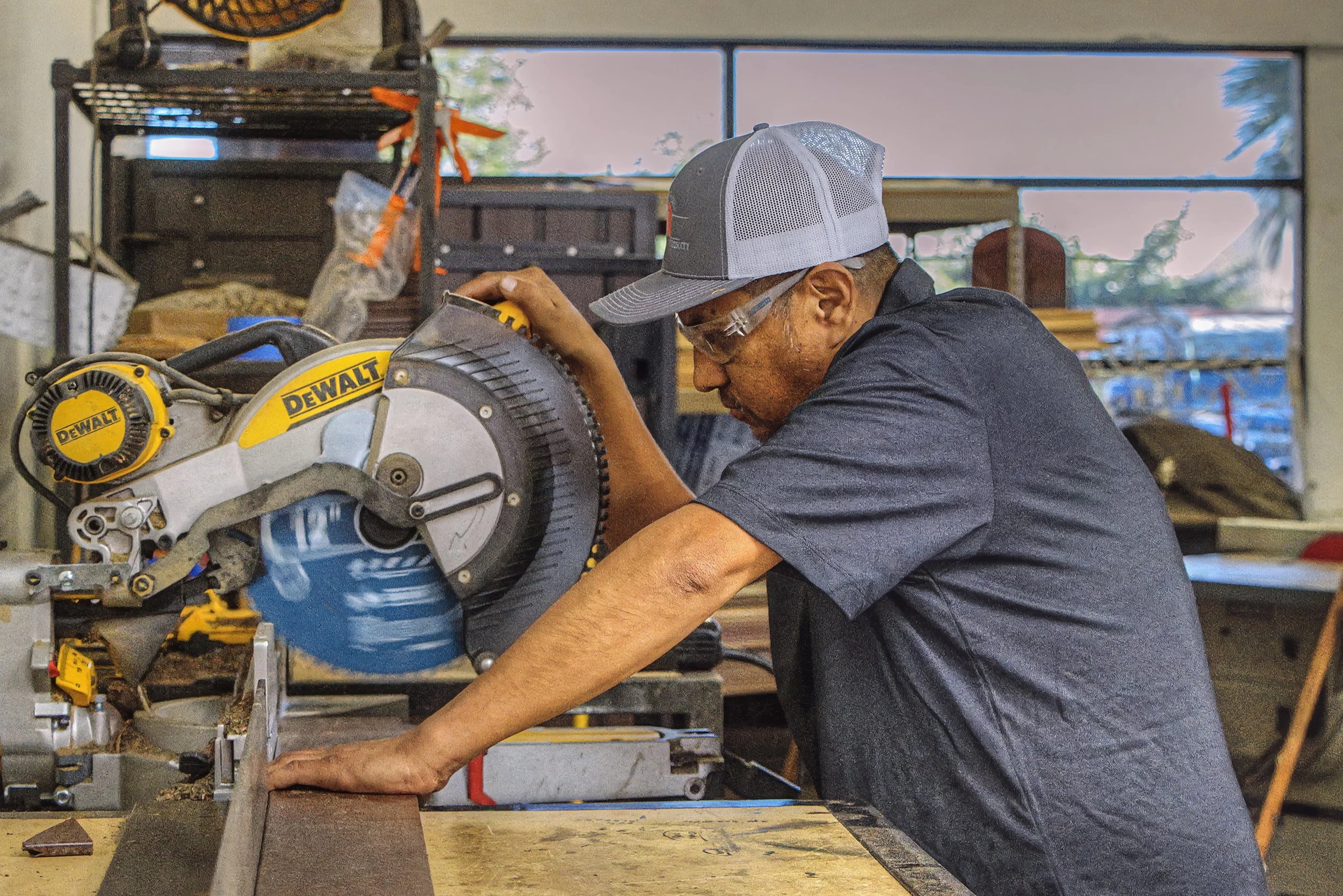
Heavy-duty swing gates handle frequent use without mechanical failure.
Not every gate is asked to do the same job. A decorative pedestrian gate on a quiet residential courtyard in Scottsdale operates a few times a week and bears a modest structural load. A heavy-duty swing gate on a contractor yard in Mesa or a multi-family property in Tempe might operate dozens of times per day, carry significant panel weight, and need to function reliably under conditions — vehicle proximity, wind load, operator force variation — that would accelerate failure in a gate not built for the application.
Heavy-duty manual swing gates are built from the beginning for demanding conditions. They are not standard gates with upgraded hinges. They are a different category of fabrication, with specifications derived from the actual demands of high-traffic, high-load, or high-security applications across the Greater Phoenix metro.
What Makes a Gate 'Heavy-Duty'?
The term is used loosely in the industry, so it is worth being specific about what it actually means in terms of fabrication and hardware standards.
Steel Frame Gauge
Standard residential gates are typically fabricated with lighter gauge square or rectangular tube steel in the frame. Heavy-duty gates use heavier gauge material — thicker wall tubing — in the main frame members. This is not cosmetic. Heavier gauge frame steel resists the racking forces that accumulate over thousands of open-close cycles, maintains dimensional stability under load, and provides a more robust substrate for weld connections at hinge points and cross-members.
Hinge Specifications
Hinges are the highest-stress components on any swing gate, and on heavy-duty applications they receive the most careful specification attention. Commercial-grade hinges for heavy-duty swing gates are rated for the actual static weight of the gate plus a dynamic load factor that accounts for the momentum of a gate being opened or closed with force. Hinge pin diameter, bearing material, and weld plate size are all specified for the application.
Weld Quality and Reinforcement
At the hinge weld plates, frame corners, and any structural intersection, heavy-duty gate fabrication involves additional weld passes and reinforcement gussets that would be over-engineering on a light residential gate but are appropriate for the stresses of heavy, frequent operation. These reinforcements are invisible in the finished gate but are the difference between a hinge point that holds for twenty years and one that develops cracks and movement within five.
Hardware Throughout
Latch systems, gate stops, and lock hardware on heavy-duty gates are all specified at commercial grade. This means heavier throw latches with more robust strike mechanisms, gate stops with sufficient mass and anchor strength to absorb over-swing shock without deforming, and lock hardware rated for outdoor exposure and frequent operation under the thermal cycling conditions of Arizona's climate.
Pro tip: The most common point of failure on gates that were not specified correctly for their use is the hinge-to-post connection. A gate that is opened and closed with force dozens of times per day puts cumulative stress on the anchor points in the post or pillar. If those anchor points — whether welded to a steel post or embedded in a block pillar — are sized for residential use on a commercial application, they will work loose over time. We specify anchor embedment depth, weld plate size, and pillar reinforcement for the actual dynamic load of each installation.
High-Traffic Applications in the Phoenix Metro
Contractor and Equipment Yards
Contractor yards and equipment storage facilities throughout Mesa, Tempe, Chandler, and the broader East Valley need entry gates that handle vehicle traffic from trucks, trailers, and heavy equipment without developing alignment or hardware problems. These gates are often left open during business hours and closed after hours, but the daily open-close cycle is still demanding, and the consequences of gate failure — security exposure, operational disruption — are real.
Multi-Family Residential Properties
Apartment communities and multi-unit residential properties in Tempe and Mesa present a specific challenge: a single gate serving many residents. Daily operation counts on these gates can reach fifty or more open-close cycles in a busy complex. The gate needs to be robust enough to handle that volume without hardware degradation, and forgiving enough to operate smoothly for residents who are not always gentle with it.
Commercial Property Perimeters
Commercial properties with perimeter security requirements — warehouses, light industrial facilities, material storage yards — need access gates that combine genuine security with reliable daily operation. Heavy-duty manual swing gates in appropriate configurations provide both without the maintenance overhead and failure vulnerability of automated systems.
High-Value Residential Properties
On larger residential properties in Scottsdale, Paradise Valley, and the higher-end Chandler and Gilbert neighborhoods, main driveway gates see significant daily use from multiple household members, service providers, and delivery traffic. Specifying a residential-grade gate for this load profile is a false economy that shows up in hardware problems and misalignment within a few years.
Single vs. Double Configuration for Heavy-Duty Applications
The choice between a single panel and a double panel configuration for a heavy-duty swing gate involves the same considerations as for any swing gate — opening width, vehicle clearance, visual proportions — with additional structural implications at heavy weights.
As gate panel width increases, the leverage force at the hinge points increases proportionally. A panel that is too wide for its weight and gauge becomes a structural problem at the hinge connection regardless of how well the hinges are specified. For openings that require clearance beyond what a single panel of appropriate proportion can provide, a double-panel configuration distributes the load across four hinge points and keeps each panel in a proportional range that the hardware can manage effectively.
Pro tip: For heavy-duty double swing gates, the passive panel — the one that stays closed except when full opening is needed — requires particular attention to the drop rod system. A drop rod that is undersized, poorly anchored at the ground socket, or stiff to operate will be bypassed by operators who simply stop using it. A passive panel that is not anchored at the bottom swings freely under wind load and creates stress on the center latch that it is not designed to handle. We specify drop rod systems for the actual wind exposure and use frequency of each installation.
Post and Footing Engineering for Heavy Gates
Heavy gates require heavy posts, and heavy posts require footings engineered for the specific load. The relationship between gate weight, post size, and footing depth is not linear — doubling the gate weight more than doubles the required footing capacity because the leverage arm of the gate creates forces at the post base that increase faster than the gate weight alone.
In Arizona's expansive soils, this engineering is not optional. Soils that cycle through monsoon moisture absorption and dry-season contraction exert lateral pressure on anything set into the ground. Posts in footings that are not deep enough or wide enough for the load they carry will migrate over time, and any migration at the post translates directly into gate misalignment.
At Sunset Gates, every heavy-duty gate project includes a footing specification derived from the gate weight, post height, soil conditions at the site, and the specific exposure conditions of the installation. We do not apply residential footing standards to commercial-load applications.
Finish Standards for Heavy-Duty Gates
Heavy-duty gates in commercial and high-traffic applications receive the same powder coat finish as residential gates — but the surface preparation before powder coat application deserves additional attention on heavier fabrications. Weld spatter, scale, and surface contamination at weld points need thorough preparation before coating to ensure adhesion at the highest-stress locations on the gate. A finish that fails at a weld point exposes bare metal at exactly the location where stress concentration makes corrosion most damaging.
FAQs
-
Heavy-duty manual swing gates for high-traffic properties in Tempe, Mesa, Chandler, and across the Greater Phoenix metro are differentiated by several specific construction choices: heavier gauge steel frame members that resist deflection under operational loads, full-penetration welds with gusset reinforcement at hinge attachment points and frame corners, hinges selected for commercial load ratings and operational frequency rather than residential defaults, latch hardware engineered for multi-user daily use, and post and footing systems sized for the combined weight and use demands of the specific commercial application. Each of these specifications is determined by the gate's actual use profile — not by a standard residential template.
-
The most common heavy-duty manual swing gate applications across the Greater Phoenix metro include contractor yards and equipment storage facilities in Tempe, Mesa, and Chandler, apartment and multi-unit residential community entries handling high daily resident traffic, industrial facility vehicle access points in the Phoenix metro, commercial properties with frequent delivery or vendor traffic, and residential properties with use profiles closer to commercial than typical single-family — such as properties hosting frequent events or with active home-based businesses. Sunset Gates assesses the specific use profile of each project and specifies accordingly.
-
Commercial-frequency gate operation — twenty, thirty, or fifty cycles per day — places significant stress on automated drive systems in Arizona's extreme heat conditions. Motor windings degrade faster under sustained high operational frequency at Phoenix metro temperatures. Control board components that might last ten years under light residential use fail significantly sooner under commercial-frequency operation in the heat. Heavy-duty manual swing gates for contractor yards, apartment complexes, and industrial properties across Tempe, Mesa, and the East Valley eliminate this failure mode entirely — there are no electronics to degrade under operational load or temperature stress.
-
Heavy-duty commercial swing gates are heavier than residential gates and impose greater cumulative load on post and footing systems through higher operational frequency. For heavy-duty gate installations across Tempe, Mesa, Chandler, Gilbert, and the East Valley, we size post dimensions and footing depth specifically for the gate weight, operational load profile, and soil conditions at the specific site. Arizona's expansive soils and caliche conditions add variables that require site-specific footing engineering — not residential standards applied to commercial conditions. Properly engineered footings are what allow a heavy-duty commercial gate to maintain alignment through years of demanding daily use.
-
Yes. Sunset Gates installs heavy-duty manual swing gates for commercial, industrial, and high-traffic residential clients throughout Tempe, Mesa, Scottsdale, Gilbert, Chandler, Phoenix, Ahwatukee Foothills, Fountain Hills, Glendale, Sun Lakes, Queen Creek, and Apache Junction. Commercial gate projects receive site-specific structural specifications, hardware selected for the actual use profile, and the same thorough on-site evaluation and written proposal process as our residential installations.
Serving the Greater Phoenix Metro
Sunset Gates fabricates and installs heavy-duty manual swing gates for residential and commercial clients throughout Tempe, Mesa, Scottsdale, Gilbert, Chandler, Phoenix, Paradise Valley, Ahwatukee Foothills, Fountain Hills, Glendale, Sun Lakes, Queen Creek, and Apache Junction.
Contact Sunset Gates to discuss your heavy-duty gate project. We will assess your site, specify the gate for your actual use conditions, and provide complete, transparent pricing before any work begins.