The Foundation No One Sees — But Everyone Depends On: Site Prep for Iron Gate Installation in Phoenix
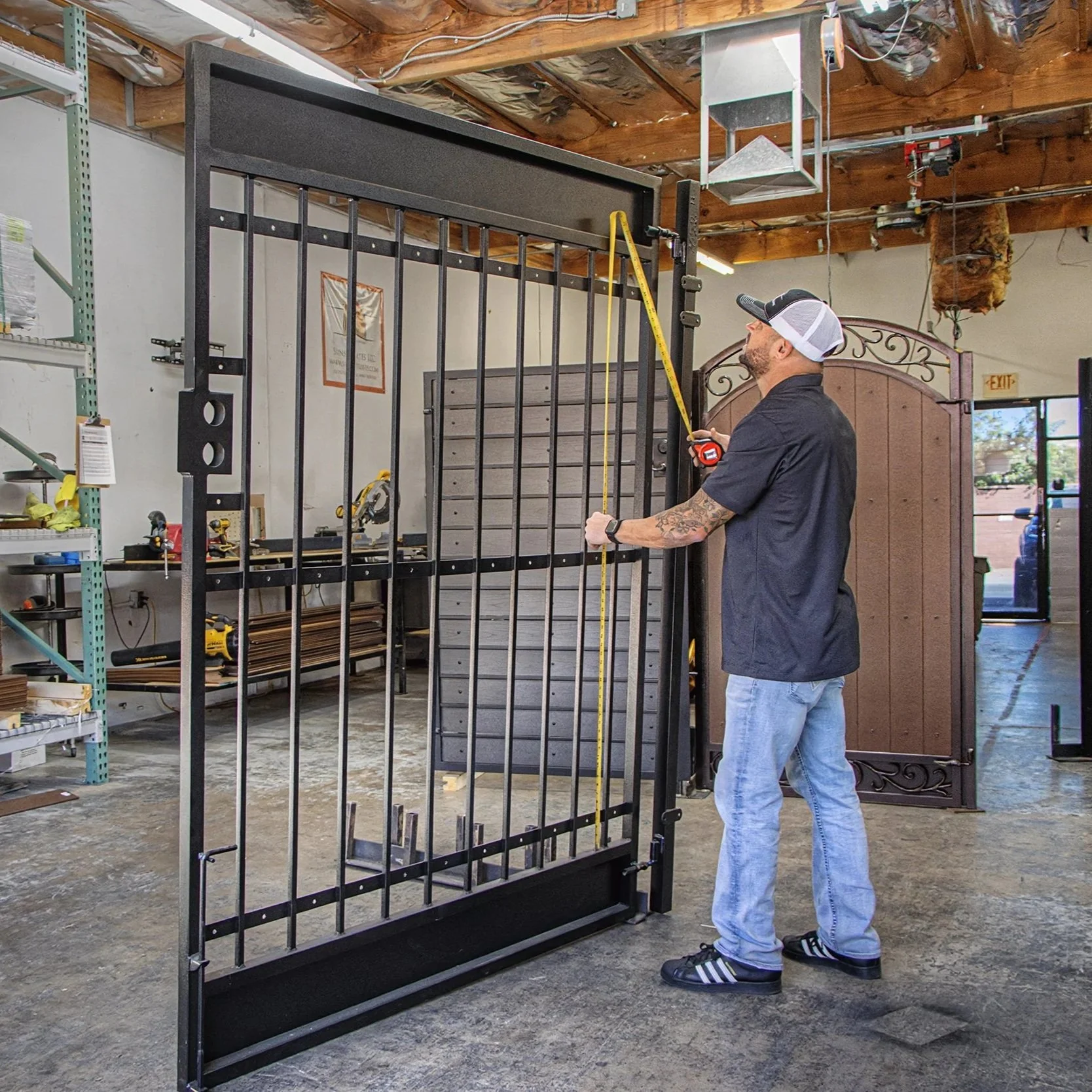
A gate is only as good as its foundation.
A beautifully fabricated custom iron gate is only as reliable as what it is hung on. Homeowners and business owners across the Greater Phoenix metro regularly discover this the hard way — when a gate that looked great on installation day starts sagging, binding, or failing to latch within a few years because the site preparation underneath it was inadequate.
At Sunset Gates, site preparation is not an afterthought. It is one of the first things we assess during every project consultation, and it directly determines how we specify posts, footings, and any structural modifications required before a gate can be installed correctly.
Why Site Prep Matters More in Arizona
Arizona's soil and climate conditions create specific challenges for gate post foundations that do not exist in most other parts of the country.
Expansive Soils
Much of the Greater Phoenix metro sits on expansive soils that absorb moisture during monsoon season and contract during dry periods. This cycle of expansion and contraction exerts lateral force on anything set into the ground — including gate posts. Posts set in undersized footings move with the soil. Posts set in properly engineered footings resist it.
Extreme Heat
Sustained temperatures above 110 degrees Fahrenheit affect everything from concrete curing to the dimensional stability of steel posts. Site preparation in the Phoenix metro requires accounting for these conditions in material selection and installation timing.
Caliche Layers
Many Phoenix-area properties have caliche — a hardened calcium carbonate layer — at varying depths below the surface. Caliche can dramatically affect how deep a footing can be dug and how it needs to be broken up or worked around to achieve adequate depth for structural integrity.
Pro tip: Caliche depth varies significantly even within a single property. We probe for it during every site evaluation because its presence determines footing methodology. A footing designed for standard soil that encounters caliche at 12 inches will not perform the same as one that accounts for it from the start.
The On-Site Evaluation
Every Sunset Gates installation project begins with a thorough on-site evaluation before any fabrication begins. We assess:
Exact opening dimensions and any variations in width at the top, middle, and bottom
Ground grade across the full opening — slope affects gate design, clearance, and how hardware is configured.
Condition and plumb of any existing gate posts, block pillars, or structural framing
Soil conditions and approximate caliche depth at post locations
Any existing concrete work, landscaping, or hardscape that may affect excavation or post placement
Setback from property lines, walls, or other structures that affect gate swing clearance
This evaluation informs the entire project. Gates that are fabricated before a proper site evaluation has been completed are regularly the gates that do not fit, do not swing correctly, or fail within a few years.
Gate Post Installation and Footing Engineering
Gate post installation is the single most structurally critical step in any gate project. The post carries the entire weight of the gate and absorbs the dynamic load of every opening and closing cycle over the gate's service life.
At Sunset Gates, we size posts and engineer footings specifically for each gate. Variables that affect this include the width of the gate, the height of the gate, the gauge and weight of the steel, the swing frequency of the installation, and the soil conditions at the specific site.
Pro tip: A known rule of thumb for post depth is one-third of the total post length below grade. For a typical residential gate post, that often means 24 to 36 inches of depth, depending on gate weight and soil conditions. Shallow posts are the single most common cause of gate sag and alignment failure over time.
Block Pillar Modifications
Many Phoenix-area properties have existing block pillars from a previous gate installation or as part of the original property construction. These pillars can often be incorporated into a new gate installation, but they frequently require modification to accept the hinge anchors correctly.
Common pillar modifications include core drilling for anchor bolt placement, adding steel embed plates, repairing or repointing deteriorated mortar joints, and reinforcing pillar caps that have cracked under thermal expansion cycles. We evaluate every existing pillar before committing to using it and are straightforward about when replacement is the better option.
Gate Opening Structural Modifications
Sometimes the opening itself needs work before a gate can be installed. This may include widening an existing opening to accommodate a larger gate, removing and repouring concrete that interferes with gate swing, or addressing grade changes caused by settling or previous landscaping work.
Opening modifications are identified during the site evaluation and included in the project scope from the beginning. We do not discover these issues on installation day.
Serving the Greater Phoenix Metro
Sunset Gates handles site preparation and structural services as part of complete gate installation projects throughout Tempe, Mesa, Scottsdale, Gilbert, Chandler, Phoenix, Paradise Valley, Ahwatukee Foothills, Fountain Hills, Glendale, Sun Lakes, Queen Creek, and Apache Junction.
FAQs
Arizona's expansive clay soils, caliche layers, extreme summer heat, and monsoon moisture cycles create footing and post conditions that are far more demanding than most other residential markets in the United States. Footings adequate in a temperate climate often fail in Phoenix-area conditions. Proper site preparation — engineered specifically for Arizona's soil behavior and climate — is what allows a wrought iron gate in Tempe, Scottsdale, or Mesa to perform reliably for decades rather than developing alignment problems within a few years.
Caliche is a hardened calcium carbonate layer found at varying depths across much of the Greater Phoenix metro, including Tempe, Mesa, Chandler, and Gilbert. It complicates gate post footing excavation because it must be broken through to reach adequate bearing depth — using caliche as the footing bottom creates a bearing surface that can fracture and shift, leading to post movement and gate misalignment. Sunset Gates assesses caliche depth at every installation site and specifies footing methodology accordingly.
Sunset Gates identifies pillar condition issues during the pre-installation site evaluation and includes any required remediation in the written project proposal before work begins. Solutions range from core drilling and re-anchoring hinge hardware to adding steel embed plates, repointing deteriorated mortar joints, or full pillar replacement. East Valley homeowners receive a clear scope and pricing for all required structural work before any commitment is made.
Yes. All required site preparation — post installation, concrete footings, pillar modifications, opening adjustments — is identified during the on-site evaluation and included in the written project proposal as part of the complete scope. There are no surprise site preparation charges on installation day for our customers across Tempe, Mesa, Scottsdale, Chandler, Gilbert, and the broader Greater Phoenix metro.
Contact Sunset Gates to schedule your on-site evaluation. We will assess your site conditions thoroughly, explain exactly what preparation is required, and include everything in a clear, transparent project proposal.