From Sketch to Steel: How the Custom Iron Gate Design Process Works in Tempe
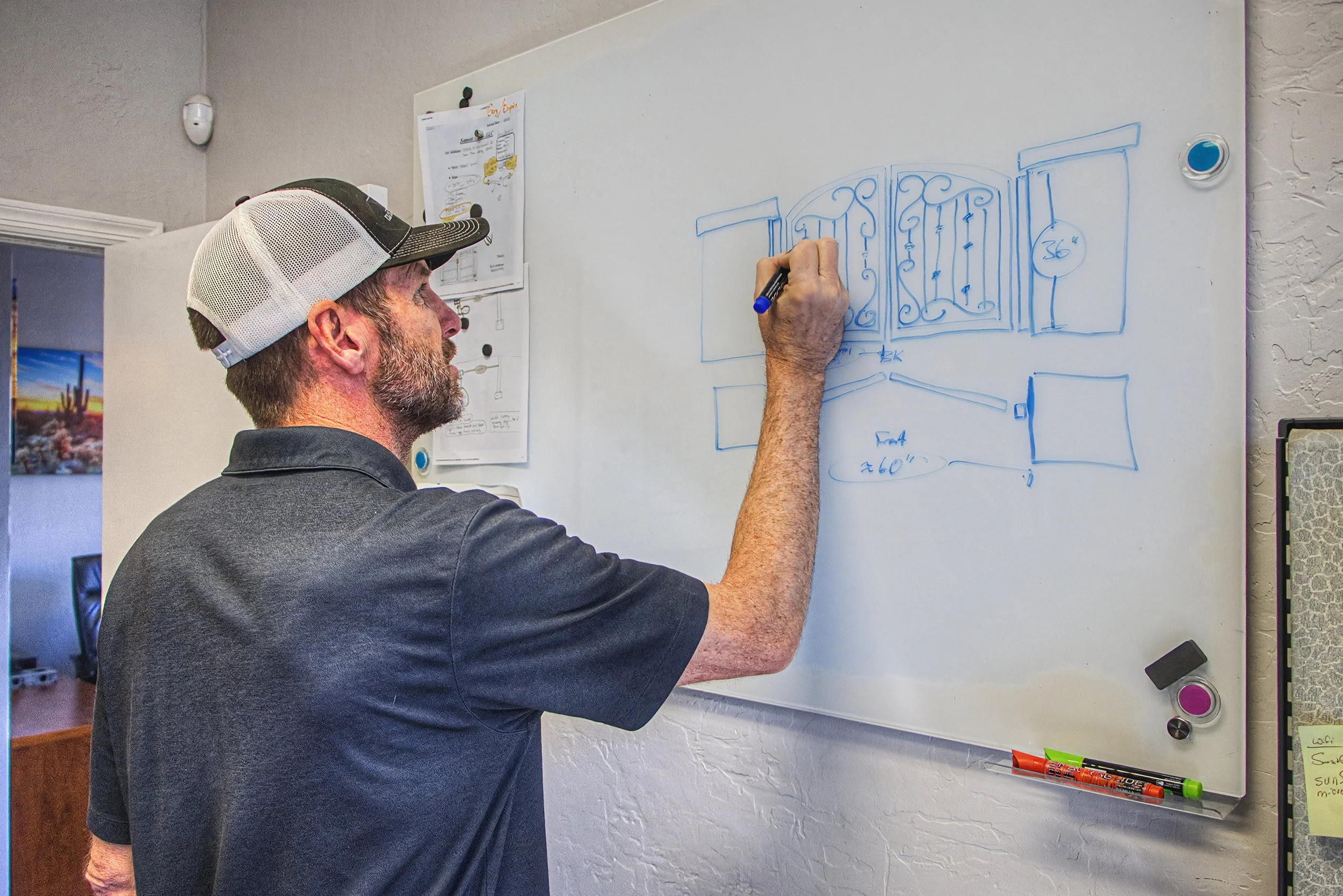
A custom wrought iron gate is only as good as the design process behind it. When that process is handled correctly, the result is a gate that fits perfectly, operates reliably, and looks like it was always part of the property. When it is rushed or skipped, the problems show up quickly — and they are expensive to fix.
If you are considering a custom iron gate in Tempe, Scottsdale, Mesa, Chandler, or anywhere in the Greater Phoenix metro, here is an honest, detailed look at how the design and fabrication process works at Sunset Gates — and why each step matters.
Why the Design Phase Is Not Optional
Some gate companies skip or minimize the design phase. They take a rough measurement, pull the closest standard gate from inventory, and adapt it to fit. The results are predictable: gaps at the posts, misaligned hardware, a gate that does not quite match the home, and hardware that fails sooner than it should.
Custom design means the gate is conceived around your specific site, your specific architecture, and your specific functional requirements. That intention is what separates a gate that performs for decades from one that becomes a recurring maintenance issue.
Step One: The On-Site Consultation
Every custom gate project at Sunset Gates begins with a visit to your property. This is not a sales call with a brochure. It is a professional site assessment.
During the consultation, we measure the opening precisely — accounting for post placement, ground grade across the opening, and the condition of any existing pillars, walls, or framing. We walk the property with you, discuss how the gate will be used, and talk through your design preferences and budget.
Pro tip: Bring photos of gates you like to the consultation. They do not need to be from Phoenix-area properties or even iron gates specifically. Any reference that communicates what appeals to you — a specific style, a proportional detail, a finish color — is useful information for the design conversation.
Step Two: Design Development
With site measurements and your design preferences in hand, we develop the gate design. This includes determining gate style — traditional ornamental, contemporary, arched, flat top, ranch, or a combination — as well as panel proportions, picket spacing, decorative detail, and finish color.
For residential projects, we pay close attention to architectural compatibility. A gate should feel like it belongs to the home rather than being placed in front of it. We look at rooflines, window and door trim details, and existing hardscape materials to inform design choices that create a cohesive entryway.
Design Options We Work With
Traditional ornamental iron with scrollwork, finials, and spear-tip pickets
Contemporary and modern designs with flat tops, horizontal rails, and clean geometry
Arched top gates for Spanish Colonial, Mediterranean, and estate-style properties
Ranch-style gates for larger lots in areas like Gilbert, Queen Creek, and Apache Junction
Steel frame privacy gate designs with solid infill panels
Custom scrollwork and ornamental detailing for estate and high-end residential applications
Multi-panel configurations for wide driveway openings
Step Three: Proposal and Approval
Before fabrication begins, you receive a detailed proposal that covers the scope of work, gate specifications, site preparation requirements, timeline, and pricing. Nothing proceeds without your explicit approval.
We do not use vague line items or verbal agreements. The proposal documents exactly what is being built, what site work is included, and what the total cost will be.
Step Four: Fabrication at Our Tempe Shop
Once the design is approved, fabrication begins at our Tempe facility. Your gate is built from scratch using steel specified for the design, not stock inventory cut down to approximate dimensions.
The fabrication process includes cutting and fitting the frame, welding all structural connections, adding decorative elements, grinding welds to finished quality, and applying the powder coat finish. Every gate is inspected before it leaves the shop.
Pro tip: Powder coating is applied after fabrication is complete, not before. Any welding done after powder coating breaks through the protective finish and creates bare metal exposure. This is a quality control detail worth asking any gate company about.
Step Five: Site Preparation
In many cases, site work is required before the gate can be installed. This may include setting new gate posts, modifying existing block pillars to accept hinges, adjusting the gate opening, or addressing ground grade issues.
Site preparation is handled by our team as part of the project. We do not subcontract this work to third parties who are unfamiliar with the gate design.
Step Six: Installation and Inspection
With the site prepared and the gate ready, installation is a precise process: hanging the gate on the hinges, adjusting swing clearance and balance, installing all hardware, and confirming latch and lock function.
A post-installation inspection confirms that the gate operates correctly and meets the agreed specifications before the project is considered complete.
FAQs
-
We come to you. Every custom iron gate project begins with a free on-site consultation at your property, whether you are in Tempe, Scottsdale, Mesa, Chandler, Gilbert, or anywhere across the Greater Phoenix metro. Standing at the actual opening with your home's architecture and landscaping visible produces better custom gate design decisions than any conversation held off-site.
-
Absolutely — and we encourage it. Reference photos of wrought iron gate designs you find appealing, architectural details on Scottsdale or Paradise Valley properties you want to echo, or even rough sketches of what you have in mind are all useful inputs to the design conversation. You do not need a fully formed design concept before the consultation.
-
Every design element — scrollwork scale and density, picket style, top profile, finish color, and hardware — is specified in the written proposal you approve before fabrication begins at our Tempe shop. That document is the fabrication specification. If a finished gate deviates from the agreed specifications, we address it. This written confirmation process is why our Phoenix metro customers rarely encounter surprises at installation.
-
Decorative elements are welded into the gate during the fabrication process — not applied superficially after the main frame is complete. This structural integration means scrollwork and ornamental details become part of the gate's load-bearing fabric, which is critical for long-term performance in Arizona's heat and wind conditions. Tack-welded decorative elements work loose over time; structurally integrated ones do not.
-
Modifications after fabrication has begun create rework costs and timeline impacts. Minor changes very early in the process may be accommodated with limited impact. Significant changes after substantial fabrication work is complete are considerably more expensive. This is why we invest time confirming every detail in writing before the first piece of steel is cut — it is always less expensive to change a specification on paper than on a fabricated gate.
Serving Homeowners Across the Greater Phoenix Metro
Sunset Gates handles custom iron gate design and fabrication for residential and commercial clients throughout Tempe, Mesa, Scottsdale, Gilbert, Chandler, Phoenix, Paradise Valley, Ahwatukee Foothills, Fountain Hills, Glendale, Sun Lakes, Queen Creek, and Apache Junction.
Contact Sunset Gates to schedule your free on-site design consultation. We will assess your property, discuss your vision, and walk you through the entire process from first conversation to finished gate.