The Last Step Most Companies Skip: Why Post-Installation Inspection Matters for Iron Gates in Arizona
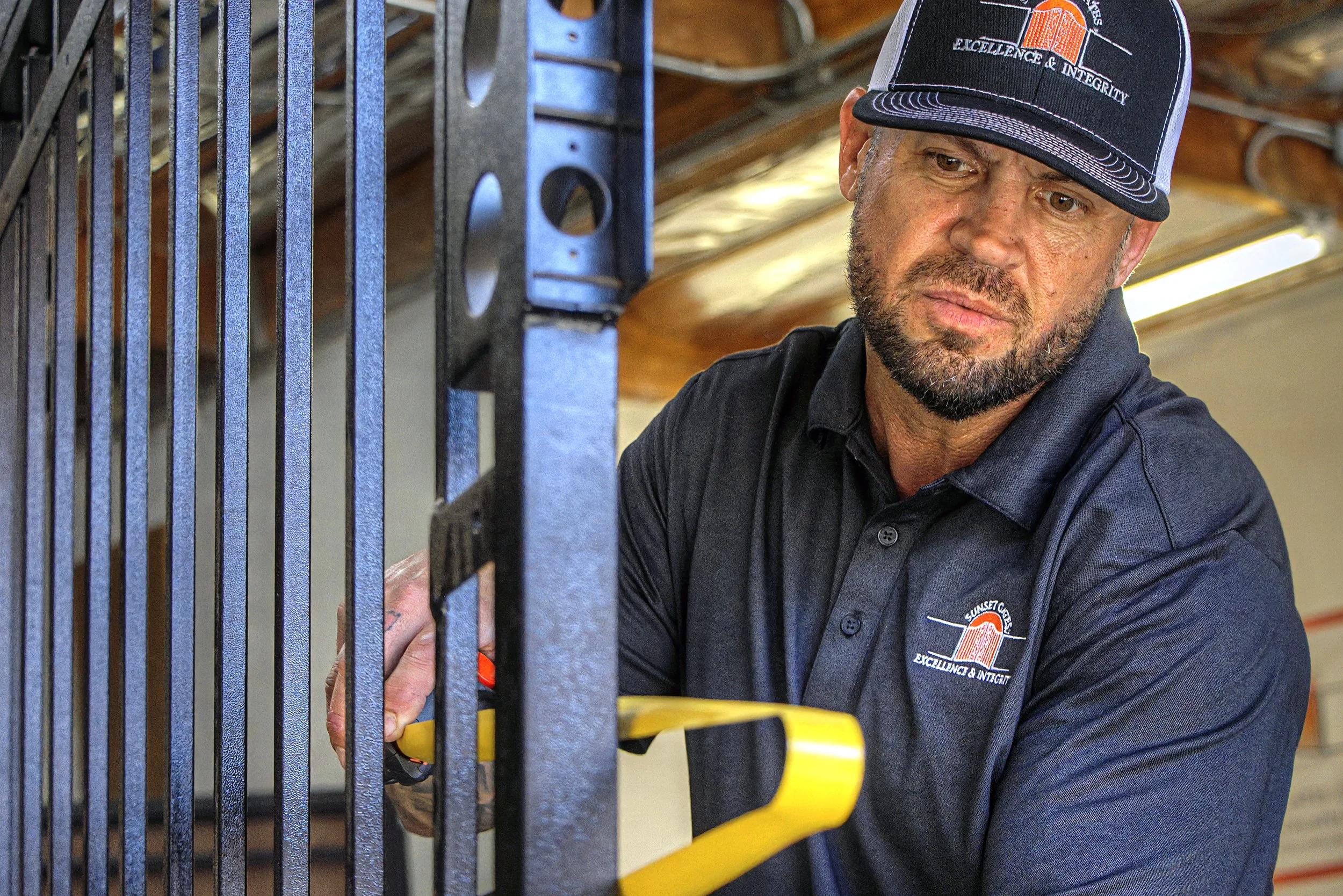
The Last Step Most Companies Skip: Why Post-Installation Inspection Matters for Iron Gates in Arizona
The crew finished up, loaded their tools, and left while you were still inside. The gate looked good from the window. You walked out an hour later and noticed that the latch catches, but only if you give the gate a little lift on the way to closing it. The hinge on the bottom is making a faint sound when you open past ninety degrees. The gate swings freely in one direction and drags slightly at the threshold in the other. These aren’t emergencies. In fact, all of them are things that a post-installation inspection would have caught and corrected before the truck pulled away. And all of them are things that will compound over the next twelve months until what started as a minor alignment issue turns into a hinge replacement, a latch mechanism that has worn through its adjustment range, or a gate that no longer passes the full swing arc without intervention.
A post-installation quality inspection is the final step in a gate installation project, and it is the step that most companies either skip entirely or perform so quickly that it does not constitute a real inspection. The inspection matters because it is the point at which the installation is evaluated as a system rather than as a collection of individual tasks that each looked correct when they were completed. A hinge that is correctly mounted can still be set at the wrong height relative to the latch hardware. A latch that is correctly installed can still be misaligned with the strike plate by two millimeters, enough that the latch catches, but not reliably under all load conditions.
What a Real Post-Installation Inspection Covers
A thorough post-installation inspection for a wrought iron gate in the Phoenix metro area covers the gate system and it is conducted while the gate is being operated rather than while it is standing still. Operating the gate through its full arc in both directions, observing how it moves at each phase of the swing, how the latch engages at the end of the closing travel, and how the gate behaves under load applied at different points on the leaf, reveals conditions that a static inspection cannot. A gate that hangs level and plumb at rest can still swing with a bias in one direction, a slight resistance, or a slight assist from the hinge geometry, which indicates a hinge mounting position that is not quite right.
The inspection should also include a review of every component that was installed during the project, rather than just the gate leaf itself. Post verticality in two directions, confirmed with a level rather than estimated visually, verifies that the installation sequence produced the plumb condition the design required. Hinge hardware torque, checked by applying the manufacturer-specified tightening to all fasteners, confirms that the installation did not leave any hardware at a hand-tight condition that will work loose under operating vibration.
The Latch System: Where Most Problems Live
Latch alignment is the most common finding in a post-installation inspection because the correct latch engagement position is the end result of multiple upstream variables: post spacing, gate fabrication dimensions, hinge mounting positions, and latch hardware geometry, all of which have to align precisely for the latch to engage correctly under all conditions. When all of those variables are exactly right, the latch snaps cleanly into the strike with the gate in its fully closed position and without any lifting, pushing, or twisting of the gate leaf. When any of those variables is off by even a small margin, the latch engagement is conditional, meaning it works when the gate is approached from one direction or at one speed but not consistently under all conditions.
The post-installation inspection is the moment to test the latch under conditions that approximate actual use rather than under the controlled approach that an installer uses when they are watching closely. Closing the gate quickly, closing it slowly, closing it from both directions, and applying lateral load to the gate leaf while the latch is engaged all reveal whether the latch system is working as it should or whether it is working only within a narrow operating envelope that will not hold up over time. Pool gates in the Phoenix metro area have the additional requirement that the self-latching mechanism functions correctly every single time without exception, because a pool gate that does not latch reliably is not just a performance problem. It is a safety one, and the inspection standard for a pool gate latch should reflect that distinction.
Finish Inspection: Catching Damage Before It Becomes Rust
The powder coat finish on a wrought iron gate is the primary barrier between the steel and the Arizona climate, and any damage to that finish that occurred during installation needs to be identified and repaired at the post-installation inspection before the gate is handed over to the homeowner. Installation processes, welding during field modification, hardware installation with impact tools, and the incidental contact of a heavy gate with tools, vehicles, and surrounding structures, all create opportunities for finish damage that may be small at the time but will become rust initiation points if left unaddressed. In Phoenix, AZ, and across the metro area, where summer UV and monsoon moisture create a demanding finish environment, even small finish defects expand faster than they would in a less extreme climate.
A finish inspection at the completion of installation should cover the full gate leaf, both faces, all edges, and the inside of any frame channels where debris and moisture can accumulate. Hinge attachment points, where the hardware contacts the gate frame, are particularly important to inspect because the tool contact involved in hardware installation creates finish damage in exactly the locations where moisture is most likely to migrate into the steel-to-hardware interface. Touch-up of finish damage at the conclusion of the installation, using a compatible touch-up product, is a standard step in a quality installation process.
Documentation: What the Homeowner Should Receive
A post-installation inspection is only partially valuable if the findings and their resolution are communicated to the homeowner in a form they can refer to later. Verbal communication at the conclusion of the inspection covers the immediate questions, but does not give the homeowner a record of what was found, what was corrected, and what the baseline condition of the gate was at the time of project completion.
Sunset Gates includes documentation of the post-installation inspection as part of the project handover because the record serves both the homeowner and the contractor if a question arises later about the gate's condition at completion. A homeowner who reports a problem six months after installation and can refer to the inspection documentation has a clear starting point for understanding whether the problem is a new development or a condition that was present at installation and was not correctly identified or resolved.
What Homeowners Should Do After the Inspection
The post-installation inspection is the installer's responsibility, but the homeowner's role in the period following the inspection is to operate the gate normally and pay attention to any changes in its behavior during the first ninety days. This early observation period is the most likely time for any installation conditions that were not caught in the inspection to become apparent, because the gate is being operated under the real conditions of daily use for the first time, by people other than the installation crew, and in the full range of temperature and moisture conditions that the Phoenix metro area produces across a season.
Specific things to watch for during the first ninety days include any change in the sound the gate makes during operation, particularly at the hinges, any change in the force required to close the gate to latch engagement, any change in the gate's clearance at the threshold, and any appearance of rust staining at the base of the hinge hardware or at welds on the gate frame. Any of these observations is worth reporting to the contractor promptly, because the first ninety days of operation are the period when most responsible gate contractors will address installation-related issues without a service charge.
FAQs
-
A thorough post-installation inspection covers gate operation through the full swing arc in both directions, latch function tested under multiple closing speeds and approach angles, hinge hardware torque confirmation, post plumb verification with a level, finish inspection on both faces and all edges of the gate leaf, threshold clearance measurement at multiple points along the gate bottom, and a review of all hardware for correct installation and secure fastening.
-
The inspection should be performed at the conclusion of the installation, before the crew leaves the site, so that any findings can be addressed immediately while the crew and all necessary tools and materials are present. Scheduling the inspection as a separate visit adds cost and timeline to the project and creates the risk that conditions that should have been corrected at installation are instead left for the follow-up visit, during which the gate may have been operated enough to make the condition worse.
-
Problems found during the inspection are corrected before the project is considered complete and before the crew leaves the site. Corrections might include latch hardware adjustment, hinge position correction, threshold clearance adjustment, finish touch-up, or hardware retorquing.
-
Yes, and doing so is a good practice even when the contractor has performed their own inspection. As the person who will operate the gate daily, you are in the best position to identify whether the gate behaves the way you expected it to and whether the latch, the swing weight, and the clearance at the threshold feel correct during normal use.
-
Ask specifically during the proposal or hiring conversation whether a post-installation inspection is included in the project scope and what it covers. A contractor who can describe the specific items they check during a post-installation inspection, rather than giving a general assurance that they stand behind their work, is demonstrating that the inspection is a defined process rather than an informal walk-around. Ask whether they document the inspection findings and what the homeowner receives at project completion.