
How Automatic Gate Openers Work: The 3 Parts That Matter
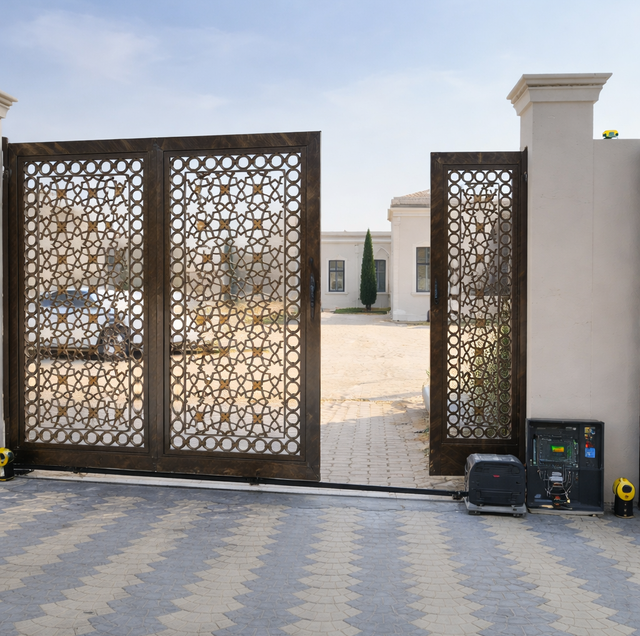
Quick Answer: An automatic gate opener is three things working together: an operator (the motor that physically moves the gate), a control board (the brain that decides when to move based on a signal), and safety devices (sensors that stop or reverse the gate if a car, pet, or person is in the way). The operator does the muscle work, the board takes the command, and the safety gear makes it safe to leave running around people.
You press a remote from your truck, and a heavy iron gate swings out of the way on its own. It looks like one thing happening, but three separate pieces are cooperating in that moment, and understanding them is the difference between a system you trust and one you fight with. The motor that moves the gate, the circuit board that told it to, and the sensors watching the opening are each doing a distinct job. Get any one of them wrong, or skip the safety layer entirely, and a convenience becomes a hazard.
The gate itself, the iron structure that hangs on hinges or rides on a track, is not the opener. That distinction matters more than most people expect, so it is worth pulling the two apart before going further.
The Gate Structure Versus the Machine That Moves It
The gate is the panel, the frame, the hinges, or the bottom track, and the posts or block pillars it mounts to. It was already a working gate before anyone talked about a motor. The opener is a bolt-on system that grabs that gate and drives it back and forth. This split is the single most useful idea in the whole subject, because almost every automation decision follows from the gate you already have: how much it weighs, how it moves, and how straight and level it hangs.
An operator has to be sized to the gate it is moving. A motor rated for a light single gate will burn out, stall, or trip its safety cutout trying to push a wide, heavy double gate. Weight, width, and how freely the gate already moves by hand all set the size of the machine needed. A gate that drags or sags before automation will drag harder with a motor forcing it, so a good installer fixes the structure first and automates second.
The Three Pieces Every Opener Shares
Strip away brand names and every automatic gate comes down to the same three roles.
The Operator: The Muscle: The operator is the motor and gearbox that physically moves the gate. It converts electricity into steady mechanical force and holds the gate at each end of its travel. On most residential systems, the operator also decides how fast the gate opens, how hard it pushes, and where it stops, all set during installation.
The Control Board: The Brain: The control board is the small circuit board, usually in a weatherproof housing near the operator, that receives signals and decides what to do with them. It knows whether the gate is open or closed; it starts and stops the motor; it reads the safety sensors; and it runs the timer that closes the gate again after a set delay. Nothing moves until the board says so.
The Safety Devices: The Reflexes: The safety devices are the sensors that stop or reverse the gate when something is in its path.
A powered gate carries enough force to crush a bumper, pin a pet, or trap a child. The safety devices are not optional accessories, and they should never be bypassed, disconnected, or taped over to quiet a nuisance sensor that keeps tripping.
How the Operator Actually Moves the Gate
The type of operator depends entirely on whether the gate swings or slides.
Swing Gate Operators: A swing gate pivots on hinges, and there are two common ways to drive it. A linear-actuator (ram) operator is a long arm that extends and retracts like a hydraulic cylinder, mounting between the post and the gate frame and pushing the gate open as it lengthens. An articulated (arm) operator uses a jointed arm that folds and unfolds, which suits gates whose hinge posts are set back inside thick block pillars where a straight ram would not fit. Both bolt to the post on one end and the gate on the other, and both need clear room to swing through their full arc.
Slide Gate Operators: A slide gate rolls sideways along a track instead of swinging. Its operator is a rack-and-pinion drive: a toothed metal strip called a gear rack bolts along the bottom rail of the gate, and a matching gear (the pinion) on the motor turns against those teeth, walking the gate open and closed like a train on a track. This layout needs no swing clearance, which is why slide operators suit narrow lots and sloped driveways where a swing gate would scrape or hit a parked car.
How the Control Board Takes a Signal
The operator only moves when the control board receives an input it recognizes, and there are several ways to send one.
A handheld remote sends a coded radio signal the board is paired to accept. A keypad mounted at the entrance opens the gate when the correct code is entered, useful for guests and service crews without handing out remotes. A phone or app connection uses a cellular or wireless module so the gate can be opened from anywhere and can log who came and went. An intercom or callbox lets a visitor buzz the house, and someone inside presses a button to release the gate. An exit sensor handles the inside: many driveways use an in-ground exit loop, a wire buried in a shallow saw-cut in the pavement that senses the metal mass of a vehicle and signals the board to open automatically as you drive up to leave.
The board treats each of these as the same basic instruction, open or close, then runs its own logic from there, including the auto-close timer that shuts the gate again after the vehicle clears.
Where the Power Comes From
Every opener needs a power source, and there are two common approaches. A hardwired system runs standard electrical service out to the operator, which suits gates near an existing power source and delivers consistent force for heavier or high-traffic gates. A solar system uses a panel to charge a battery that runs the motor, which fits gates far from any electrical run where trenching a line would be costly.
Both approaches lean on a battery. Solar systems store their charge in one, and many hardwired systems keep a backup battery so the gate still cycles a limited number of times during a power outage. A battery is a wear item, though, and a system that worked for years can go dead simply because nobody replaced the battery when it aged out.
The Safety Devices That Keep It From Hurting Someone
This is the layer people are most tempted to skip and the one that matters most. Several devices work together so the gate can sense an obstruction and react.
Photo-eyes are the most familiar: a pair of sensors, one emitting an invisible beam and one receiving it, aimed across the gate opening. Break the beam with a car or a person, and the board stops the gate or reverses it, the same principle as a garage door sensor. Safety edges are pressure-sensitive strips run along the leading edge of the gate; if the moving gate touches anything, the edge compresses, the circuit signals the board, and the gate reverses on contact. Obstruction or current sensing is built into the control board itself: the board watches how hard the motor is working, and a sudden spike in current, meaning the gate has hit something solid, tells it to stop and back off.
Layered together, these give a powered gate the reflexes to protect a bumper, a pet, or a child. None of them substitute for keeping kids away from a moving gate, and none should ever be disabled to quiet a false trip. A sensor that keeps tripping is telling you it needs alignment or cleaning, not removal.
Manual Release and Getting Out During a Power Loss
Every operator has a manual release, a key-operated or lever mechanism that disconnects the motor from the gate so it can be pushed by hand. It exists for the moment the power is out and the backup battery is dead, so a car is not trapped inside or outside. Knowing where the release is and how to work it before you need it is part of owning an automatic gate, and it is one of the first things a good installer should show you.
Keeping It Running
An opener is a machine exposed to weather, dust, and constant cycling, so a little upkeep goes a long way. Moving joints, hinges, and the actuator arm need periodic lubrication with the type of lubricant the manufacturer specifies, since the wrong grease can attract grit and worsen wear.
Lubricate the moving joints, hinges, and actuator arm with the lubricant the manufacturer specifies, since the wrong grease attracts grit and speeds wear. On a slide gate, keep the track and gear rack clear of debris and the rollers running freely.
Hinges on a swing gate wear over time and a sagging gate throws off the operator's travel and strains the motor. And the battery, whether solar or backup, is the part most likely to end a system's life quietly, so it gets checked and replaced on schedule rather than after it fails.
Because the automation ties directly into electrical power and carries real crushing force, the install and any wiring is pro work, not a weekend project. Sizing the operator to the gate, setting the open and close limits, dialing in the obstruction sensitivity, and wiring the safety devices correctly are what separate a gate that runs safely for years from one that damages a vehicle or hurts someone.
Frequently Asked Questions
Most well-built gates can be automated, but the gate has to be evaluated first. It needs to hang square, move freely, and have solid posts or pillars that can take the operator's mounting force and the repeated stress of cycling. A gate that already sags, binds, or has loose hinges should be repaired before a motor is added, because automation multiplies every existing problem rather than hiding it.
UL 325 is the safety standard that residential and commercial gate operators are built to, and it is the reason modern openers require external safety devices like photo-eyes or edges to be connected before the gate will run in automatic mode. An operator that meets it is designed to monitor for entrapment and reverse, which is why installing a standard-compliant opener and leaving its sensors active matters more than any convenience feature.
That is the auto-close timer and the safety sensors working together. After a vehicle triggers the gate, the board waits a set delay before closing, and if a photo-eye beam is still broken or the exit loop still senses a vehicle in the opening, the board holds the gate open instead of closing on the car. The gate will not resume its close cycle until the opening is clear.
If the operator has a charged backup battery, yes, for a limited number of cycles before that battery drains. Solar systems run on battery by design and keep working through an outage as long as the battery holds charge. Once any battery is dead, you use the manual release to disconnect the motor and move the gate by hand, which is exactly what that release is there for.
The most common cause is a safety device doing its job on a false trigger: a photo-eye knocked out of alignment, a lens fogged or coated with dust, a spider web across the beam, or a safety edge pinched by debris. The board reads the interrupted signal as an obstruction and reverses. Cleaning and realigning the sensors usually fixes it, and the fix is never to disconnect the sensor that keeps tripping.
Neither is inherently harder, but the wear points differ. A swing operator's actuator and hinges take the load of starting and stopping a pivoting mass, so hinge condition and arm lubrication drive its lifespan. A slide operator's gear rack and pinion mesh thousands of times, so keeping that rack clean and the rollers free governs wear. Matching the operator size to the gate's actual weight is what keeps either type from working itself to death.
Ask us to spec the right operator and safety setup for your gate — a properly sized, fully protected automatic gate that runs for years. Sunset Gates serves Tempe and the East Valley. Call (480) 210-1572.
