
Single vs Double Driveway Gate: How to Decide
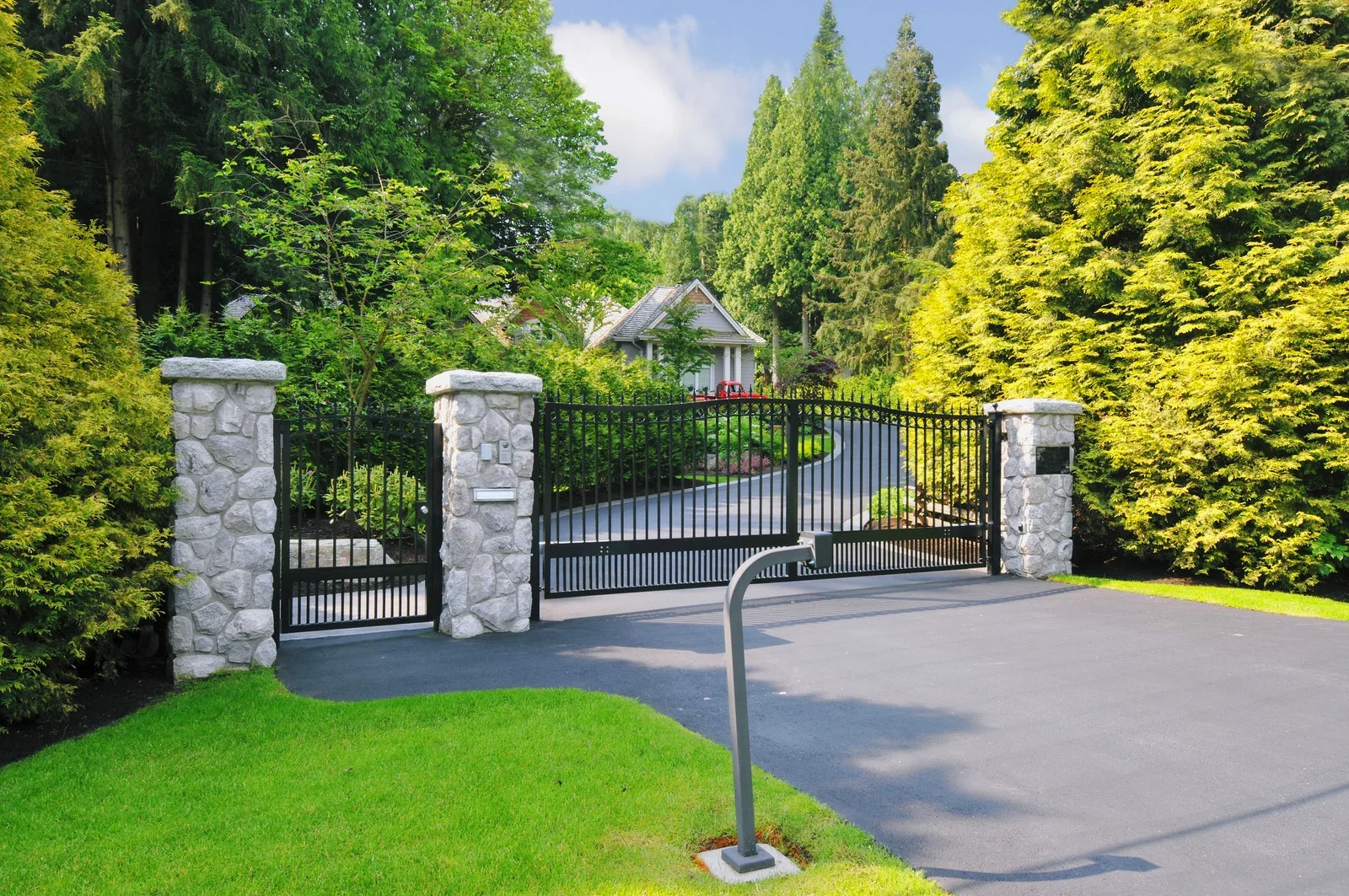
Quick Answer: A single driveway gate is one solid panel that swings or slides open as a unit, while a double gate splits into two panels that meet in the middle and open outward from the center. The right choice depends mostly on your driveway width and the space available to open. A single gate suits narrower driveways and works well as a slide gate, but as a swing gate a single wide panel needs a long, clear arc to open. A double gate splits a wide opening into two shorter panels, so each needs less room to swing — making double gates a common choice for wide driveways. Your driveway width, opening style, space, and look all factor in.
When planning a driveway gate, one of the first decisions is whether to go with a single gate — one panel that opens as a unit — or a double gate that splits into two panels meeting in the middle. It's a practical choice driven largely by your driveway and the space you have to work with. Understanding how each configuration works helps you pick the one that fits your property.
What Single and Double Gates Are
A single driveway gate is one continuous panel that covers the whole opening and opens as a single unit, either swinging on hinges to one side or sliding across. A double gate (sometimes called a bi-parting gate) is made of two panels that meet in the center when closed and open by swinging or parting outward from the middle, each panel covering half the opening. The core difference is one panel versus two, and that difference shapes how much space each needs to open and what driveway widths they suit.
Driveway Width Is the Biggest Factor
The width of your driveway opening is usually the deciding factor. A single gate has to span the entire opening with one panel. On a narrower driveway, that's simple enough. But on a wide driveway, a single swing gate means one very long panel, which needs a large, clear arc of space to swing open and puts a lot of weight and stress on its hinges and post. A double gate splits that same wide opening into two shorter panels, so each panel is half the length, needing less room to swing and putting less strain on each side. This is why double gates are a common, practical choice for wide driveways, while single gates suit narrower ones.
| Factor | Single Gate | Double Gate |
|---|---|---|
| Panels | One panel | Two panels meeting in middle |
| Best driveway width | Narrower openings | Wider openings |
| Swing space (per panel) | Long arc for a wide panel | Shorter arc, split between two |
| Strain on hinges/posts | More on one side for wide gates | Split between two sides |
| Look | Clean, single span | Symmetrical, classic |
Opening Style Matters Too
How the gate opens interacts with the single-versus-double choice. For swing gates, the space-to-open issue is central: a single wide swing gate needs a long clear arc, which is exactly the problem a double swing gate solves by halving the panel length. For slide gates, a single panel slides sideways along the fence line rather than swinging, so it doesn't need swing clearance — making a single slide gate a strong option for wide driveways where there's room alongside to slide, and where a swing gate would be impractical. So part of the decision is whether the gate swings or slides, since that changes how much the panel count matters.
Space, Slope, and Practical Considerations
Beyond width, consider the space and conditions around the opening. Swing gates need clearance in the arc where they open, and a slope can interfere with a swing gate's path, sometimes making one configuration more practical than another. The room available alongside the driveway affects whether a slide gate works. The look you want matters as well — a double gate offers a symmetrical, classic appearance, while a single gate gives a clean, uninterrupted span. And the weight and length of the panels affect the hardware and any automation. All of these feed into which configuration is the better fit for your specific driveway.
Before deciding, picture the gate opening in the actual space. Stand at your driveway and trace where a swinging panel would travel — a single wide panel's arc is often surprisingly large. If that arc runs into a slope, a parked car, or a wall, a double gate or a slide gate may be the more practical answer.
How to Choose
The choice usually becomes clear once you account for your driveway width, opening style, and space. For a narrower driveway, a single gate is often the natural, clean choice. For a wide driveway, a double swing gate splits the opening into manageable panels, or a single slide gate avoids swing clearance altogether if there's room alongside. Factor in any slope, the space around the opening, the symmetrical-versus-single look you prefer, and how the gate will be automated. Because the right configuration depends on these specifics, a gate professional can assess your driveway and recommend the setup that works best for your width, space, and style — and that will operate reliably for years.
Frequently Asked Questions
A single gate is one continuous panel that covers the whole opening and opens as a unit, swinging or sliding. A double gate is two panels that meet in the middle when closed and open outward from the center, each covering half the opening. The core difference is one panel versus two, which affects how much space each needs to open and what driveway widths they suit.
For a wide driveway, a double swing gate is a common choice because it splits the wide opening into two shorter panels, each needing less room to swing than a single long panel would. Alternatively, a single slide gate works well on a wide opening if there's room alongside to slide, since it avoids swing clearance entirely. Both handle wide driveways better than a single swing gate.
Because one panel has to span the entire opening, so on a wide driveway it's a long panel that needs a large, clear arc to swing open. That long panel also puts significant weight and stress on its hinges and post. A double gate solves this by halving the panel length, and a slide gate avoids swing clearance by sliding sideways instead.
Yes. For swing gates, the space to open is central — a single wide swing gate needs a long arc, which a double swing gate avoids. For slide gates, a single panel slides along the fence line without needing swing clearance, making it a strong option for wide driveways with room alongside. So whether you swing or slide changes how much the single-versus-double choice matters.
It can. Swing gates need a clear arc to open, and a slope can interfere with that path, sometimes making a swing gate impractical or favoring one configuration. On a slope, a slide gate may be the better solution since it doesn't swing through the grade. Assessing how the gate would move on your specific slope helps determine the right configuration.
Start with your driveway width and opening style. A narrower driveway often suits a single gate; a wide one favors a double swing gate or a single slide gate. Then factor in the space and any slope around the opening, the look you want, and how the gate will be automated. A gate professional can assess your driveway and recommend the best configuration.
Let Your Driveway Decide
The single-versus-double driveway gate choice comes down mostly to your driveway width and the space to open: single gates suit narrower openings, while double gates split a wide opening into manageable panels, and a slide gate sidesteps swing clearance altogether. Factor in opening style, slope, space, and the look you want. Picture the gate moving in your actual space, and the configuration that fits your property usually becomes clear.
Planning a driveway gate and unsure single or double? — Get your driveway assessed for the configuration that fits best. Sunset Gates serves Tempe and the East Valley. Call (480) 210-1572.
