
What Causes Rust on an Iron Gate (and How to Stop It)
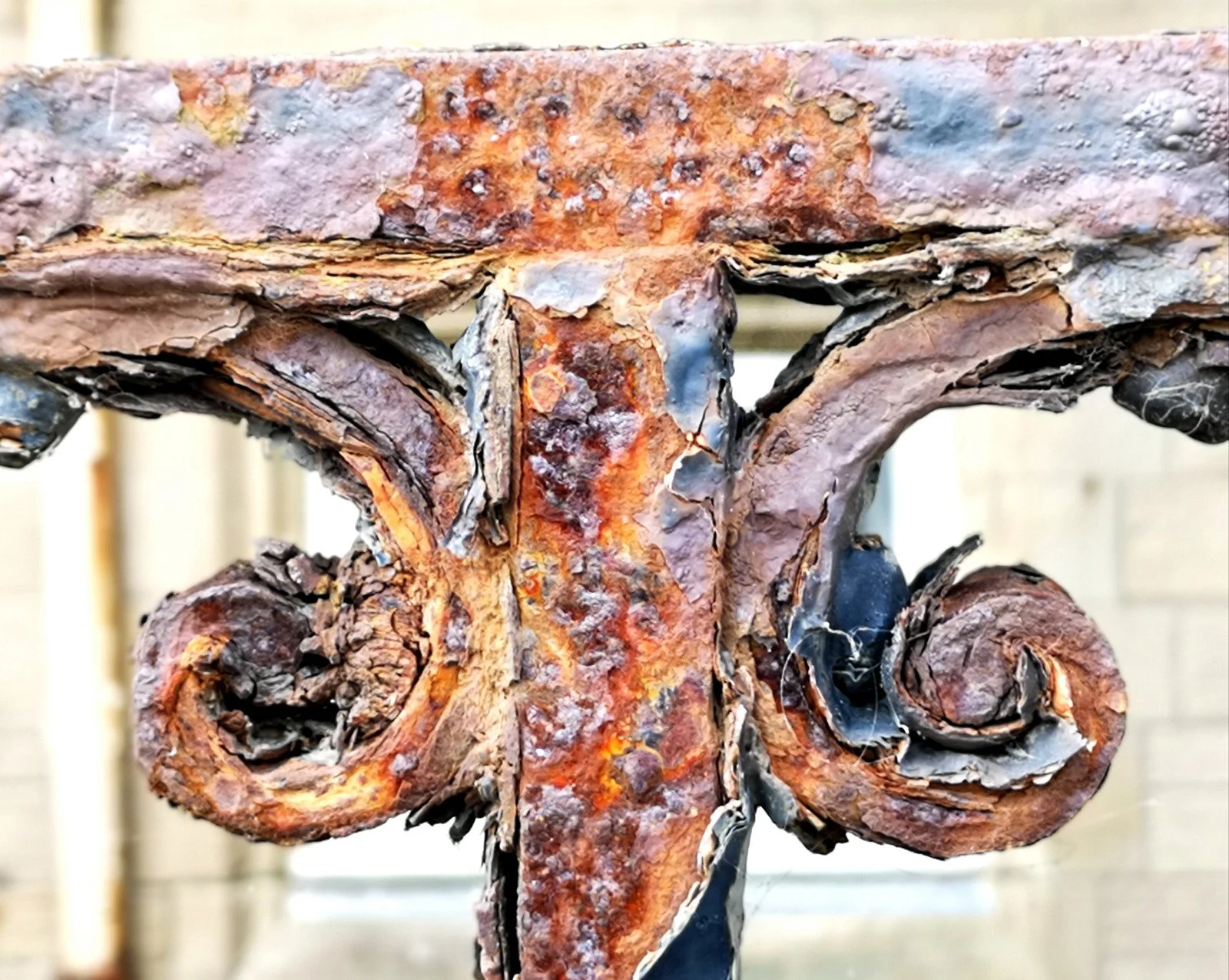
Quick Answer: Rust forms when iron is exposed to moisture and oxygen — and on a gate, that exposure usually starts where the protective coating chips, scratches, or wears thin. Once bare metal meets water and air, it oxidizes into rust, which then spreads under the surrounding paint. To stop it, you remove the rust down to clean metal, prime with a rust-inhibiting primer, and repaint with an exterior metal finish. Catching it early and keeping the coating intact is what keeps it from coming back.
A wrought iron gate can last for decades, but iron has one permanent weakness: it wants to rust. The gate's paint or coating is the only thing standing between the metal and that process, and the moment that barrier is breached, the clock starts. The good news is that rust is both preventable and fixable once you understand the simple chemistry driving it.
Why Iron Rusts
Rust is what happens when iron reacts with oxygen in the presence of moisture — it's iron oxidizing, the same process that turns a left-out nail orange. All three ingredients have to be present: iron, water, and air. Your gate has the iron, the air is everywhere, so the whole battle is about controlling the water's access to the metal.
That's the job of the coating. Paint, powder coating, or a galvanized layer seals the iron off from moisture and air. As long as that coating is intact, the metal underneath stays protected. Rust gets started when the coating fails somewhere — and on a gate, that happens more than you'd think.
Where It Usually Starts
Rust almost always begins at a weak point in the coating, not in the middle of a healthy painted surface. The common entry points:
- Chips and scratches — from the gate banging the latch post, hardware rubbing, or impacts that break the paint.
- Worn high-contact areas — hinges, the latch, and edges where the finish thins from use and weather.
- Joints and welds — corners and seams collect water and are easy to miss when painting.
- The bottom of the gate — where it sits closest to the ground, takes splashback, and stays damp longest.
- Old, chalky, or cracked paint — an aging finish loses its seal and lets moisture seep underneath.
Once water and air reach bare metal at any of these spots, oxidation begins, and the rust then creeps outward under the adjacent paint, lifting it from below. That's why a small rust spot left alone keeps growing — it's working underneath the coating where you can't see it.
What Makes It Worse
A few conditions speed rust along. Constant moisture is the big one — sprinklers hitting the gate, splashback from the ground, or pooling water at the base keep the metal wet far longer than rain alone. Salt accelerates corrosion, which matters near pools and in coastal air. And neglect compounds everything: a chip that would take ten minutes to touch up becomes a spreading patch within a season if it's ignored. In the East Valley's climate, the main culprits are usually irrigation overspray and an aging finish rather than humidity, so where your sprinklers point can matter as much as the paint itself.
How to Remove Rust and Stop It
| Step | What it does |
|---|---|
| Remove the rust | Sand, wire-brush, or grind back to clean, bright metal |
| Clean the surface | Wipe away dust and residue so primer bonds |
| Apply rust-inhibiting primer | Seals the bare metal and blocks future oxidation |
| Repaint with exterior metal finish | Restores the protective barrier and the look |
| Keep water off the metal | Adjust sprinklers, fix drainage, touch up chips early |
The repair sequence is what actually stops rust rather than hiding it. First, remove all the rust — sand it, wire-brush it, or grind it back until you reach clean, bright metal, because any rust left behind keeps spreading under the new paint. Then clean the area so the next coat bonds. Apply a rust-inhibiting primer made for metal; this is the critical step, because the primer seals the bare iron and chemically resists further oxidation. Finally, repaint with an exterior-grade metal finish to restore the barrier. Skipping the rust removal or the primer is why a quick coat of paint over rust always fails — the rust keeps working underneath.
Prevention after that is simple maintenance: keep sprinklers from spraying the gate, make sure water drains away from the base, and touch up any chip or scratch as soon as you spot it, before it can get a foothold. A gate whose coating stays intact essentially doesn't rust.
For heavy rust that's eaten into the metal, weakened a joint, or spread across a large area, the repair is bigger than a touch-up — that's when it's worth having the gate properly stripped, repaired, and refinished, or assessed for whether a corroded section needs welding.
Frequently Asked Questions
Rust forms when iron is exposed to moisture and oxygen, causing the metal to oxidize. On a gate, that exposure starts wherever the protective coating chips, scratches, wears thin, or cracks with age. Once water and air reach the bare metal, rust begins and then spreads underneath the surrounding paint. Keeping the coating intact and the metal dry is what prevents it.
Not effectively. Painting over rust traps it underneath, and it keeps spreading, lifting the new paint from below. The right way is to remove all the rust down to clean metal, apply a rust-inhibiting primer, then repaint with an exterior metal finish. The rust removal and the primer are the steps that actually stop it — paint alone over rust always fails.
After removing the rust and repriming, keep the protective coating intact and keep water off the metal. Adjust sprinklers so they don't spray the gate, make sure water drains away from the base, and touch up any chip or scratch as soon as it appears. A gate whose coating stays sealed and stays dry essentially doesn't rust, so prevention is mostly small, timely maintenance.
Usually, because the rust wasn't fully removed before repainting, or the bare metal wasn't primed, leftover rust keeps spreading under the new coat. It also returns when a water source keeps hitting the metal, like a sprinkler or poor drainage at the base. Stopping it for good means removing all the rust, priming, repainting, and eliminating the moisture reaching the metal.
Yes, often it's the main cause. Sprinklers that hit the gate keep the metal wet far longer than rain would, and that constant moisture is exactly what rust needs. The base of the gate is especially vulnerable to splashback and pooling. Redirecting irrigation away from the gate and improving drainage at its base removes one of the most common reasons gates rust in this area.
Keep the Coating, Skip the Rust
Iron rusts for one reason — moisture and air reaching bare metal — and the gate's coating is the whole defense. Rust starts at chips, worn edges, joints, and the damp bottom rail, then spreads unseen beneath the paint. Fixing it means going back to clean metal, priming with a rust inhibitor, and repainting, not just brushing over it. Keep the finish intact, keep sprinklers off it, and your gate can stay rust-free for years.
Rust creeping across your iron gate? — Get it properly stripped, primed, refinished, and the moisture source corrected. Sunset Gates serves Tempe and the East Valley. Call (480) 210-1572.
