
Why Wrought Iron Gates Outlast Wood and Vinyl in the Heat
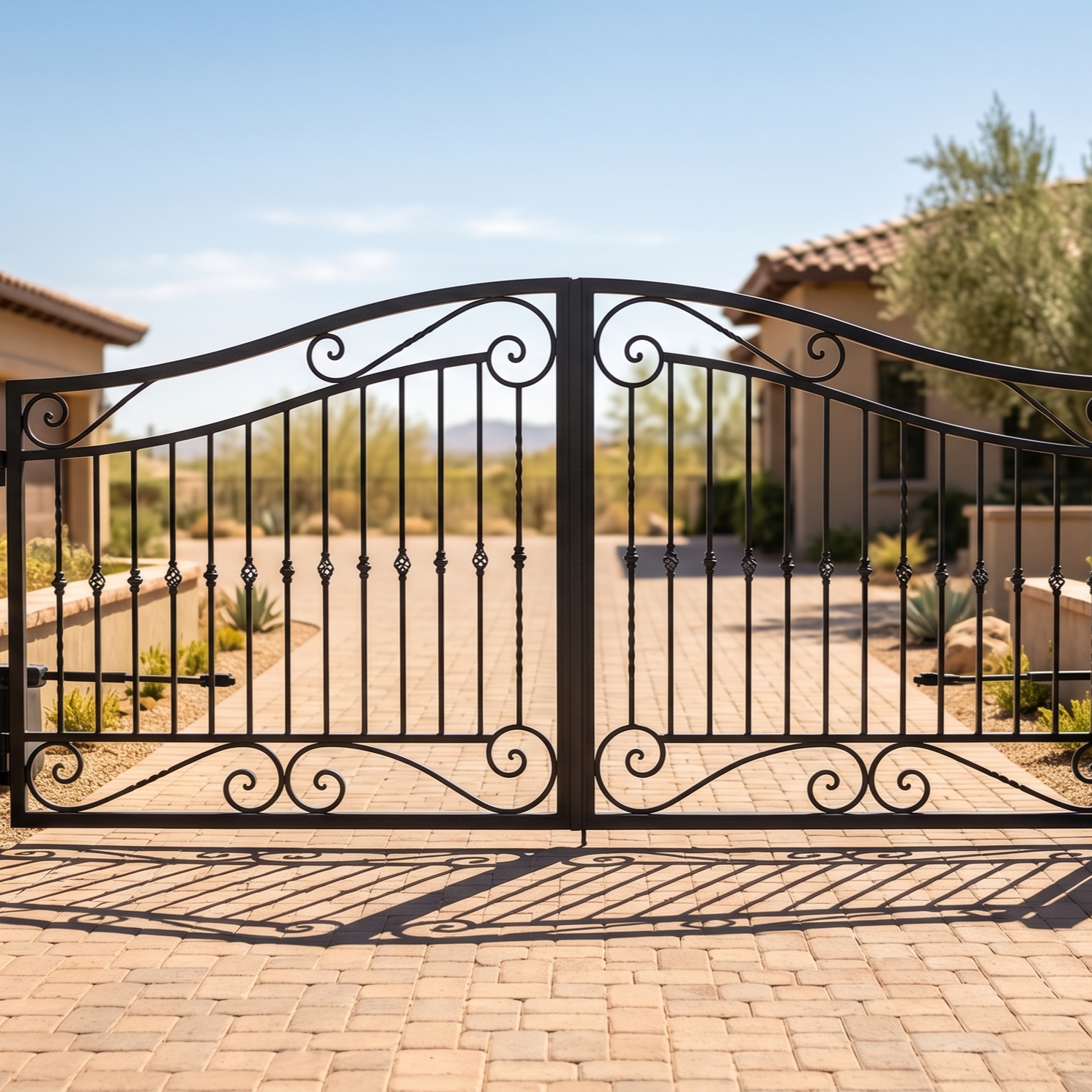
Quick Answer: Wrought iron gates outlast wood and vinyl in a hot climate because iron, as a metal, doesn't warp, crack, dry out, or degrade from intense heat and UV the way those materials do. Wood dries, grays, cracks, splits, and warps in the sun and needs regular sealing to slow it. Vinyl can become brittle, fade, and warp or sag under extreme, sustained heat. Wrought iron simply handles the heat — its main vulnerability is rust, which a maintained protective finish controls. So while each material has trade-offs, iron's heat and UV resistance give it the longevity edge in a harsh sun climate, especially for a hardworking driveway gate.
In a climate of relentless sun and extreme heat, gate materials are tested hard, and they don't all hold up equally. Homeowners often notice that wrought iron gates endure where wood and vinyl struggle. The reason comes down to how each material physically responds to intense heat and UV — and why iron's main weakness is more manageable than the others'. This is why iron tends to win on longevity.
How Heat and Sun Attack Gate Materials
A driveway gate in a hot climate faces constant, intense sun and high heat, day after day. Different materials respond very differently to that exposure. Some dry out and break down; some soften, warp, or become brittle; and some are essentially unbothered by the heat itself. Understanding each material's response explains the longevity difference. The gate that lasts is the one whose material doesn't degrade under the specific stresses of sun and heat — and that's where the comparison plays out.
Wood: Dries, Cracks, and Grays
Wood is a natural material, and intense sun is hard on it. UV breaks down the wood's surface, graying it, while the heat dries the wood out. Dried, sun-beaten wood is prone to cracking, splitting, warping, and checking over time. To hold up in harsh sun, a wood gate needs regular maintenance — sealing or staining to protect against UV and drying — and without that upkeep, it deteriorates faster. So wood can be beautiful, but in a hot climate, it's working against the sun the whole time and requires ongoing care to last. For a heavy, hardworking driveway gate, the drying and warping are particularly consequential.
Vinyl: Can Become Brittle and Warp
Vinyl is often chosen for low maintenance, but extreme, sustained heat is one of its weaknesses. Under intense, prolonged sun and heat, vinyl can become brittle over time, fade, and in severe heat, it can warp, sag, or deform. The same material that resists moisture and rot can struggle with the relentless thermal stress of a harsh-sun climate. So while vinyl avoids some of wood's issues, extreme heat exposes its own vulnerabilities, which can shorten its life or affect its appearance and shape on a large driveway gate.
| Material | How it handles intense heat/sun |
|---|---|
| Wood | Dries, grays, cracks, warps; needs sealing |
| Vinyl | Can become brittle, fade, warp/sag in extreme heat |
| Wrought iron | Doesn't warp or degrade from heat; main risk is rust |
Wrought Iron: Built to Take the Heat
Wrought iron's advantage in this comparison is simple: as a metal, it doesn't warp, crack, dry out, or degrade from heat and UV the way wood and vinyl do. The intense sun that grays wood and embrittles vinyl doesn't deform or break down iron. That heat-and-UV resistance is the core reason iron gates endure in harsh-sun climates — the primary stress that wears out the other materials barely affects iron. On top of that, iron is extremely strong and substantial, which suits a durable, secure driveway gate built to last.
Iron's Trade-Off Is More Manageable
Wrought iron isn't without a weakness — its main vulnerability is rust. Iron can corrode if its protective finish (paint or powder coating) is compromised and the metal is exposed to moisture. But there's a reason that's more manageable than the others' issues: rust is controlled by maintaining the protective finish and addressing any corrosion, and in a dry, hot climate, moisture exposure is often limited to things like irrigation, which can be managed. Compared to the inevitable, sun-driven drying of wood or thermal embrittlement of vinyl — which the harsh climate causes continuously — iron's rust risk is a maintainable finish issue rather than a fundamental breakdown from the heat itself. That's why iron's trade-off doesn't undermine its longevity edge the way heat undermines the others.
If you choose wrought iron in a hot, dry climate, keep its protective finish intact and address any rust early, especially near irrigation. A well-maintained finish is what lets iron's natural heat-and-UV resistance translate into a gate that lasts decades, since rust is its one real vulnerability.
Why Longevity Matters for a Driveway Gate
A driveway gate is a significant, hardworking installation — large, often automated, and used constantly — so longevity really matters. A material that warps, cracks, or becomes brittle doesn't just look worse; it can also affect how the gate operates, especially in automated systems that depend on the gate staying straight and true. Wrought iron's resistance to heat-driven deformation means it stays dimensionally stable and structurally sound in conditions that wear down wood and vinyl, which is part of why it's a popular, lasting choice for driveway gates in hot climates. Choosing a material that endures the sun pays off in years of reliable service. A gate professional can help you weigh iron against other materials for your specific climate and needs.
Frequently Asked Questions
Because iron, as a metal, doesn't warp, crack, dry out, or degrade from intense heat and UV the way wood and vinyl do. The sun that grays and cracks wood and can embrittle vinyl doesn't deform or break down iron. Iron's main vulnerability is rust, which a maintained protective finish controls, so its trade-off is more manageable than heat damage.
Intense sun and heat break down wood's surface and dry it out. UV grays the wood, and the drying makes it prone to cracking, splitting, warping, and checking over time. To last in harsh sun, a wood gate needs regular sealing or staining, and without that maintenance, it deteriorates faster. The drying and warping are especially consequential for a large driveway gate.
It can. Under intense, sustained heat and sun, vinyl can become brittle over time, fade, and in severe heat, warp, sag, or deform. While vinyl resists moisture and rot, extreme thermal stress is one of its weaknesses, which can shorten its life or affect its shape and appearance — particularly on a large driveway gate exposed to relentless sun.
It can rust if its protective finish is compromised and the metal is exposed to moisture. But this is more manageable than the heat damage that affects wood and vinyl: rust is controlled by maintaining the finish and addressing corrosion early, and in a dry climate, moisture exposure is often limited. So iron's vulnerability is a maintainable finish issue rather than a fundamental heat-driven breakdown.
Yes, it's a popular, lasting choice for driveway gates, especially in hot climates. Iron is extremely strong and substantial, suiting a secure, durable gate, and it resists the heat-driven warping and degradation that wear down other materials. Its dimensional stability also helps automated gates operate reliably, since they depend on the gate staying straight. Its main upkeep is maintaining the finish against rust.
Keep its protective finish — paint or powder coating — intact, and address any rust early before it spreads, paying attention to areas near irrigation or moisture. Because rust is iron's main vulnerability while heat barely affects it, maintaining the finish is what lets the gate's natural durability translate into decades of service. A gate professional can advise on finishes and maintenance for your climate.
Iron Endures What the Sun Throws at It
Wrought iron gates outlast wood and vinyl in a hot climate because iron doesn't warp, dry, crack, or grow brittle in the heat and sun the way those materials do. Wood dries and cracks; vinyl can embrittle and warp; iron simply takes the heat. Its one weakness, rust, is a maintainable finish issue rather than an inevitable heat-driven breakdown. For a hardworking driveway gate built to last under relentless sun, that resistance is why iron wins on longevity.
Want a driveway gate that lasts in the desert sun — Get expert guidance on a durable wrought iron gate built for the heat. Sunset Gates serves Tempe and the East Valley. Call (480) 210-1572.
