
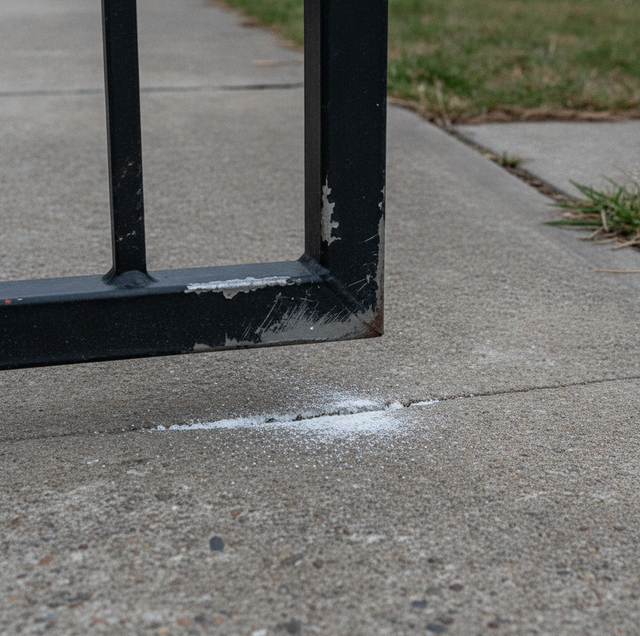
An iron gate that once swung open cleanly now scrapes the driveway, catches at the latch, or hangs visibly lower on one side. A sagging, dragging gate is more than an annoyance; it wears on the gate and hardware and gets worse as the gate's own weight keeps working against whatever is failing. The causes are mechanical and identifiable, and one of them, the hinge post, is the one homeowners most often overlook.
Here is why an iron gate sags and drags, and what is really behind it.
A Gate Is a Lever Fighting Gravity
An iron gate hangs off its hinges on one side and reaches out into the air on the other, which makes it a long lever with gravity constantly pulling down on the far end. Any small amount of droop at the hinge side gets multiplied across the width of the gate, so a little play in a hinge or a slight tilt in the post becomes several inches of drag at the latch. That multiplying force is why iron gates, being heavy, expose weaknesses faster than a light wooden gate would, and why the trouble almost always originates on the hinge side rather than at the latch where you notice it.
The Common Causes
A few related problems account for most sagging iron gates.
Worn or loose hinges are the most visible. The hinges carry the gate's full weight and take constant stress, so their pivots wear and their fasteners loosen, letting the gate drop. A gate frame that has racked, twisted out of square under its own weight, is another, and it usually means the diagonal brace is missing or installed the wrong way. On a properly braced gate, the diagonal runs from the top corner on the latch side down to the bottom corner on the hinge side, so it carries the load in compression; or a steel cable and turnbuckle runs the opposite diagonal in tension. Get that orientation backward, and the brace does nothing. Corrosion weakens the metal of hinges, welds, and frames, so solid parts give way. And beneath all of it, a shifting hinge post pulls the whole gate down with it.
You can usually narrow it down yourself in three steps, working from the post inward:
- Hold a level against the hinge post. If it reads out of plumb, the footing has shifted, and the post is your problem, no matter how the hinges look.
- Lift the latch side of the gate a few inches. If it rises easily and the whole assembly rocks or the post moves at ground level, the footing is loose. If the post stays solid but the gate still drops, move to the hinges.
- Check the hinges and frame. Play or wear at the hinge pivots points to the hinges; a frame that has visibly twisted out of square points to a missing or reversed diagonal brace.
Why the Post Is So Often the Real Fix
Here is the part people miss. A heavy iron gate puts enormous strain on its hinge post, and if that post has shifted because the soil around its footing has settled or moved, or the footing was never deep or solid enough for the load, then the post itself is leaning, and everything bolted to it leans too. In that situation, you can rebuild the hinges all day, and the gate will still drag, because the thing the hinges are mounted to is out of plumb. A quick way to tell the post apart from the hinges: hold a level against the hinge post, and lift the latch side of the gate slightly. If the post is out of plumb, or the gate lifts easily and the whole assembly rocks at the base, the post is the problem, and the lasting fix is resetting it on a proper footing, poured deep enough and wide enough to carry the gate, rather than just servicing the hinges.
Why Heat and Dust Are Hard on Gates
Two local conditions work against iron gates here. The soils shift with moisture changes, expanding when wet and contracting as they dry, which over time can heave or settle a hinge post's footing and start the tilt that leads to sagging. And the intense sun and heat are hard on gate finishes, so where a powder coat or paint fails, corrosion sets in on the hinges, hardware, and frame, worst near irrigation heads that spray the metal. Because both the soil movement and the finish stress run year-round, a hinge post set on a deep, correctly sized footing and a finish kept intact are what keep a heavy iron gate hanging straight rather than drooping into the driveway.
Frequently Asked Questions
Put a level on the hinge post first; a post that reads out of plumb is your answer. Then lift the latch side of the gate a few inches: if it rises easily and you can feel the whole assembly rock or the post move at ground level, the footing has shifted. If the post stays plumb and solid, but the gate still drops, and you can see play or wear where the hinges pivot, the hinges are the culprit. Doing this two-minute check before any repair saves fixing the wrong thing.
A cable-and-turnbuckle anti-sag kit can pull a racked frame back into square, but only when the sag is coming from the frame twisting, not from a leaning post or worn hinges. It is installed on the diagonal, anchored at the top hinge corner and the bottom latch corner, and tightened to lift the drooping end. If you install one and the gate still drags after tightening, the problem is below the frame, at the hinges or the post, and the kit is treating the wrong cause.
A caster or gate wheel will hold the dragging end up and let the gate roll, and it is a common quick fix, but it is a band-aid rather than a repair. The wheel transfers the gate's weight to the ground instead of correcting why the gate dropped. It can dig ruts, bind on uneven driveways, and it does not stop a leaning post or failing hinges from getting worse. It is reasonable as a stopgap, not a substitute for fixing the actual cause.
Heavy-duty steel gate hinges rated for the gate's weight, typically weld-on barrel hinges or bolt-on adjustable hinges with greasable pivots, are what stand up to a heavy iron gate. Adjustable hinges are useful because they allow small alignment corrections later without cutting anything. Whatever the type, the hinges have to be sized for the actual gate weight; undersized hinges are a frequent reason a heavy gate starts to droop within a few years.
Deep and wide enough to resist the pull of the gate without moving, which for a heavy iron driveway gate means a substantial concrete footing, not a shallow post hole. In areas with expansive or frost-affected soils, the footing has to account for that movement so it does not heave or settle. Because the exact size depends on the gate's weight and span and the local soil, this is worth sizing correctly at installation; an undersized footing is the root of many gates that sag a season or two later.
Because the soil under the hinge post is moving with moisture. Expansive soils swell when they are wet and shrink as they dry, so a post on a marginal footing can tilt enough to drag the gate during one part of the year and ease back during another. That seasonal come-and-go is a strong sign that the footing, not the hinges, is the underlying issue, since worn hinges would cause a steady droop rather than one that changes with the weather.
Getting the Diagnosis Right
An iron gate sags because its own weight has overcome something on the hinge side, worn hinges, a racked frame, corrosion, or a hinge post that has shifted in the ground. The level-and-lift check tells you which, and it frequently points below the hardware to the post. Servicing hinges or adding an anti-sag cable is the right fix when the frame or hinges are at fault, but when the post has moved, only resetting it on a proper footing makes the repair hold, which matters most where shifting soils and a harsh sun are working on the gate all year.
If your iron gate is sagging or dragging, we can find whether it's the hinges, the frame, or the post, and fix it to hang straight. Sunset Gates serves Tempe and the East Valley. Call (480) 210-1572.
